
Surprising statistic: a single misconfigured wallet or a stray IP leak can collapse the privacy of dozens of seemingly anonymized transactions. For U.S.-based privacy-conscious users, that reality reshapes how you should think about wallets for Monero (XMR), Litecoin (LTC), Bitcoin (BTC) and other assets. This piece unpacks the mechanisms that make privacy wallets effective, compares concrete trade-offs across protocols (MWEB vs. Monero ring signatures, for example), and gives practical criteria you can use when evaluating a multi-currency, non-custodial wallet.
The stakes are practical: financial privacy is not just about hiding amounts. It is a stack of protections — keys, address reuse patterns, network metadata, third-party telemetry, and the ability to route or shield transactions. Understanding each layer helps you decide what to run locally, what to outsource to hardware, and where the residual risks remain.
Mechanisms: how different privacy layers actually work
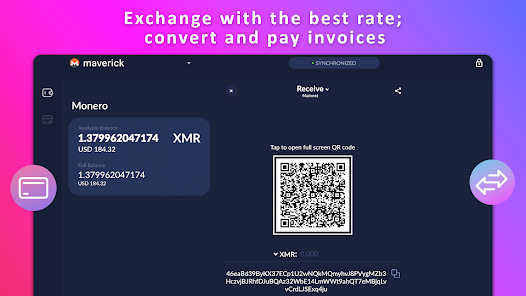
Start with the basics: Monero and Litecoin approach privacy differently because the underlying blockchains solve different problems. Monero is privacy-native: ring signatures, stealth addresses, and confidential transactions are built into the protocol to obscure sender, recipient, and amount. In practical terms that means a Monero wallet must manage subaddresses (unique one-time addresses that improve unlinkability), keep the private view key local (so transaction scanning doesn’t leak info), and synchronize in a privacy-preserving way — ideally with background sync tied to Tor or I2P. A wallet that keeps the private view key on-device and offers Tor-only connections is preserving how Monero’s protocol is meant to protect users.
Litecoin’s privacy story is additive: MimbleWimble Extension Blocks (MWEB) are an optional privacy layer. MWEB combines confidential transactions and transaction aggregation to hide amounts and obfuscate linkage. The trade-off is optionality: users must opt into MWEB to get those benefits, and because it sits in an extension block the wallet and user flow need to make that explicit. That optionality increases complexity: not every counterparty or exchange supports MWEB outputs, and frequent cross-chain or on-chain interactions can undo privacy if you mix MWEB and legacy UTXOs carelessly.
Stacked protections a privacy-aware wallet should provide
A mature privacy wallet is about layered defences. Look for: no-telemetry/no-data-collection policies so the developer cannot log addresses or usage patterns; device-level encryption tied to hardware roots of trust (Secure Enclave on iOS, TPM on modern Android) to protect keys if the device is compromised; hardware wallet integration to move signing offline; and network routing options such as Tor-only mode or I2P proxies that mask IP-level correlation. Those are not marketing points — they’re functional controls that close common deanonymization vectors.
For users who want multi-currency convenience without centralized custodial risk, cross-chain swap mechanisms matter. Decentralized routing systems like NEAR Intents automate discovery of competitive rates among market makers and reduce single-point-of-failure exposure. But automated swaps introduce a new privacy surface: the path of a swap, the counterparties, and any revealed change addresses can leak linkage unless the wallet takes care to re-shuffle outputs or uses privacy-preserving intermediaries. A wallet that combines internal coin control (for UTXO-based coins), mandatory shielding for coins like Zcash, and decentralized swap routing gives more consistent privacy outcomes — while still demanding educated use by the user.
Trade-offs and limitations you need to understand
No wallet eliminates risk entirely. Device-level encryption prevents casual key extraction but cannot protect against a full compromise of an unlocked device or malware that intercepts PINs and biometrics. Tor-only modes hide IP addresses but can degrade usability (latency, connectivity) and sometimes trigger anti-abuse blocks on exchanges or services. Optional privacy layers like Litecoin’s MWEB help hide amounts, yet require disciplined patterns: mixing MWEB and clearchain UTXOs, or withdrawing to custodial services that don’t support MWEB, will re-expose transaction graph information.
Hardware wallet integration is powerful because it separates signing from the online host, but it introduces usability friction and its own threat model: an attacker who can subvert the host computer or trick the user with a malicious address can still cause loss if prompts are ignored. Air-gapped hardware options (like Cupcake-style devices) substantially reduce the attack surface, but they are less convenient for frequent, small-value transactions.
Applying the mechanics: a simple decision framework for US privacy users
Here’s a compact heuristic to guide choices: 1) Define your privacy objective (plausible deniability, transactional unlinkability, or custody minimization). 2) Map each objective to technical controls (Monero for strong unlinkability, MWEB for confidential LTC transfers, Tor/I2P and custom node use for IP privacy). 3) Apply human rules: use subaddresses diligently, avoid address reuse, prefer hardware signing for larger sums, and segregate assets you intend to spend frequently from reserve holdings kept in more guarded setups. 4) Test recovery and migration paths before putting large amounts in — open-source, non-custodial wallets still require careful backup of seed phrases, and known limitations (for example, Zcash migration incompatibilities with some wallets) matter in practice.
If you want a concrete place to evaluate these trade-offs, consider examining a multi-platform wallet that is open-source, supports Monero features like background synchronization and private view key retention on-device, integrates MWEB for LTC, offers Tor and I2P, hardware integrations (Ledger, air-gapped Cupcake), and enforces a strict no-telemetry stance. That stack addresses many leak vectors while leaving the user in full control of keys and node choices — which is the point of non-custodial privacy wallets like cake wallet.
What to watch next: near-term signals that matter
Monitor three threads: (1) adoption and tooling around extension privacy layers (like MWEB) — wider support among exchanges will reduce the friction of staying private; (2) changes in mobile OS security models — improvements or regressions in hardware-backed key stores change the calculus for device-level security; (3) regulatory pressure on on-ramps and KYC processes — as exchanges and payment rails evolve, the way optional privacy features interact with compliance requirements will affect usability for U.S.-based users. Each signal shifts which trade-offs are tolerable.
FAQ
Q: If I use Monero in a privacy-first wallet, am I fully anonymous?
A: Monero is designed to provide strong unlinkability and untraceability, but “fully anonymous” depends on the surrounding processes. Network-level metadata (IP addresses), poor operational security (address reuse, linking transactions to public identities), and device compromise can still deanonymize you. Use Tor/I2P, keep private keys local, employ subaddresses, and prefer hardware signing where practical.
Q: What practical problems come from using Litecoin’s MWEB?
A: MWEB hides amounts and aggregates transactions, but it’s optional and not universally supported by exchanges or services. If you receive MWEB funds and then send to a service that expects legacy UTXOs, you may expose linkage. Also, you must actively opt into MWEB outputs in the wallet, so user interface design and education are important to avoid accidental de-anonymization.
Q: Is a multi-currency wallet inherently less private than single-currency wallets?
A: Not inherently — a well-designed multi-currency wallet can centralize best practices (e.g., Tor routing, no-telemetry, hardware integration). But complexity increases risks: different coins have different privacy semantics, and cross-chain swaps can reveal linkages unless the wallet coordinates coin control and swap routing carefully. Simplicity in workflows often yields stronger real-world privacy than theoretical coverage of every feature.
Q: How should I back up keys and seeds for maximum privacy and recoverability?
A: Use offline backups (metal plate or written seed stored in secure locations), split backups if you want spatial redundancy, and test recovery on an air-gapped device. Never store seeds in cloud services or screenshots. Remember that some wallets have migration idiosyncrasies (for example, Zcash migration issues between certain wallets), so validate cross-wallet recovery before a full migration.
Decision-useful takeaway: treat privacy as an engineered stack, not a single switch. Choose tools that make good defaults (no telemetry, mandatory shielding where needed, Tor/I2P support), but also invest a small amount of operational discipline: separate spending vs. reserve wallets, use hardware signing for value, and learn how your chosen wallet handles optional privacy features like MWEB. Those steps convert theoretical protections into real, repeatable privacy outcomes.